Mail 2.0 · The imperial post, rebuilt
A letter for every voter. No two alike.
We read the public record on every consistent voter and every donor in your district, write each of them their own letter in your voice, and put it on paper with a pen. Real ink. Real stamp. Real envelope.
First · The mailbox
Political mail is a postcard that gets thrown away. This is a letter that gets kept.
Campaigns pay about sixty cents to put a glossy card in a mailbox. It is read for two seconds on the way to the bin, because it was written for a hundred thousand people at once and it shows.
The one piece of mail everyone still opens is the one with a handwritten envelope and a real stamp. Volunteers have known this for years. Randomized trials of handwritten letters to voters have moved turnout by close to a point in a presidential year and by one to three points in the years that decide primaries, and those letters were the same template copied by hand, over and over.
We took the part that works, the pen and the envelope, and fixed the part that never did. Every letter we send is written for the one person whose name is on it, from what is already public about them: how often they vote, what their precinct did last time, what closed on their street, what they gave and to whom, what they stood up and said at the council meeting.
Then a pen writes it. Not a font that looks like handwriting. A fountain pen, held by a machine, on paper, one letter at a time, at the scale of a whole district.

It gets opened
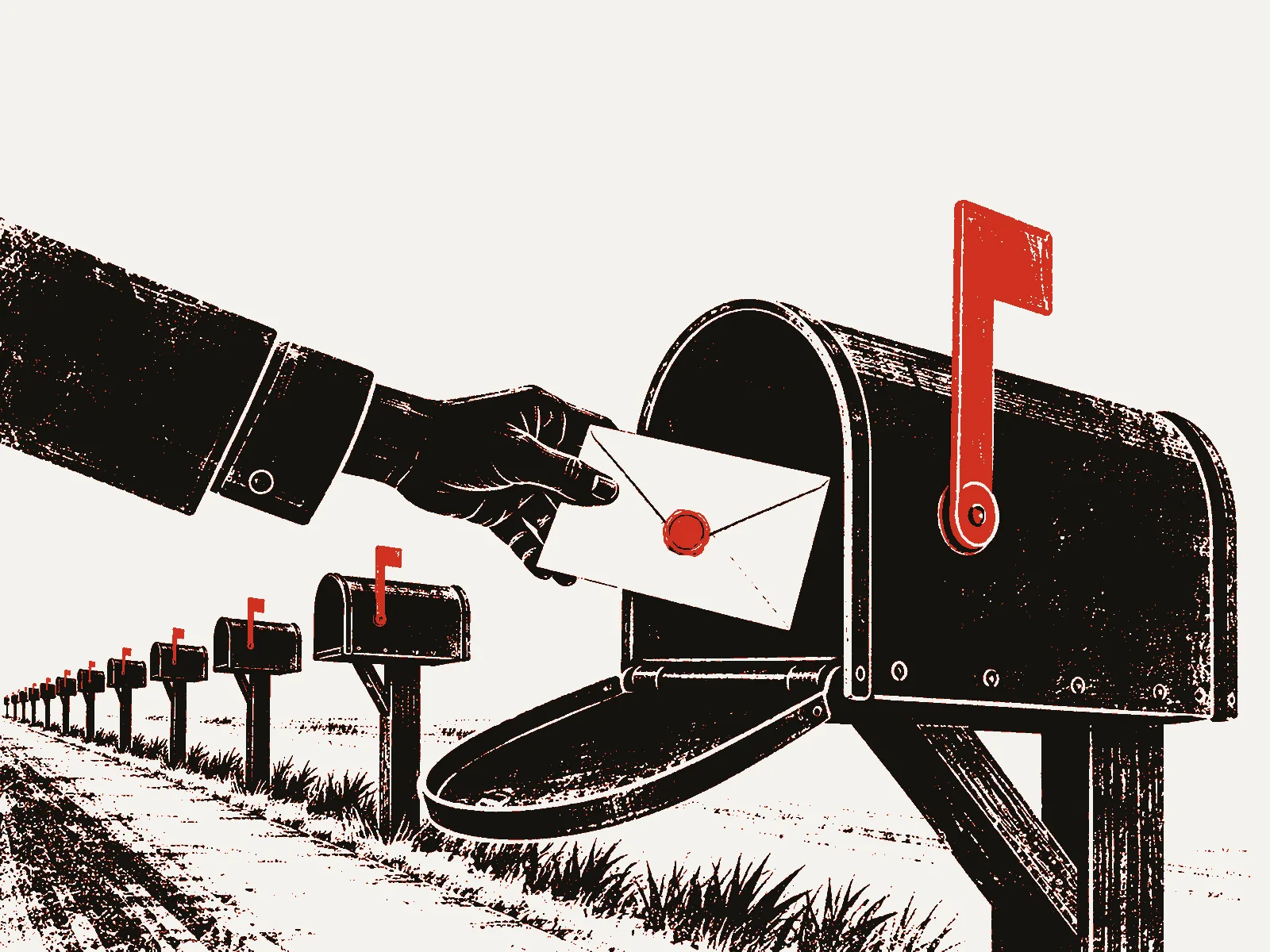
Hand-addressed, real stamp, no window, no bulk-rate indicia. It does not look like campaign mail because it is not.

It gets read
The first line is about them, not you. A letter that knows the reader's precinct gets to the end.

It gets kept
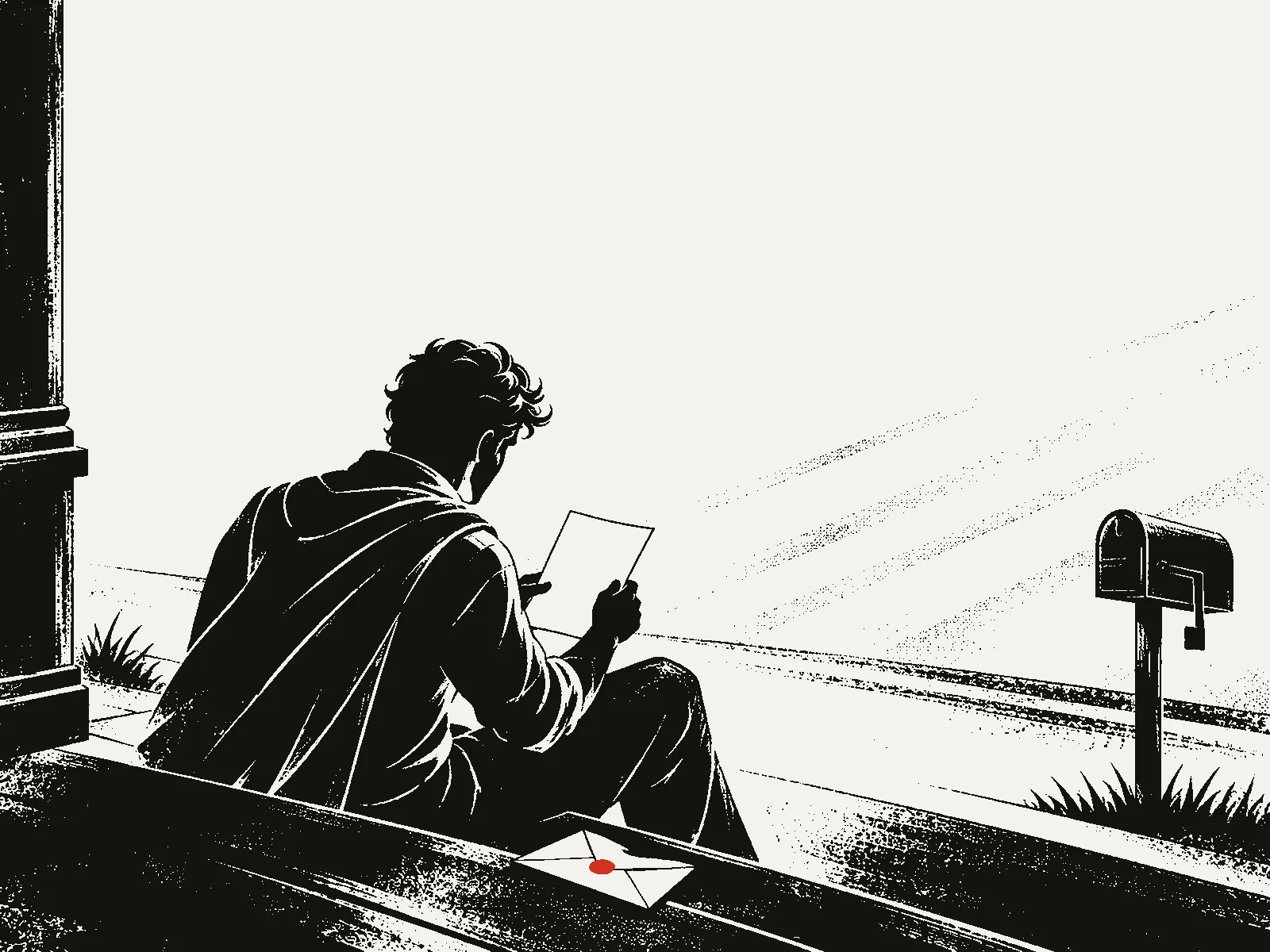
Paper with a person's name on it in ink does not go in the bin. It goes on the fridge, and it gets shown to the neighbor.
Mail was the first mass medium.
This is the first personal one.
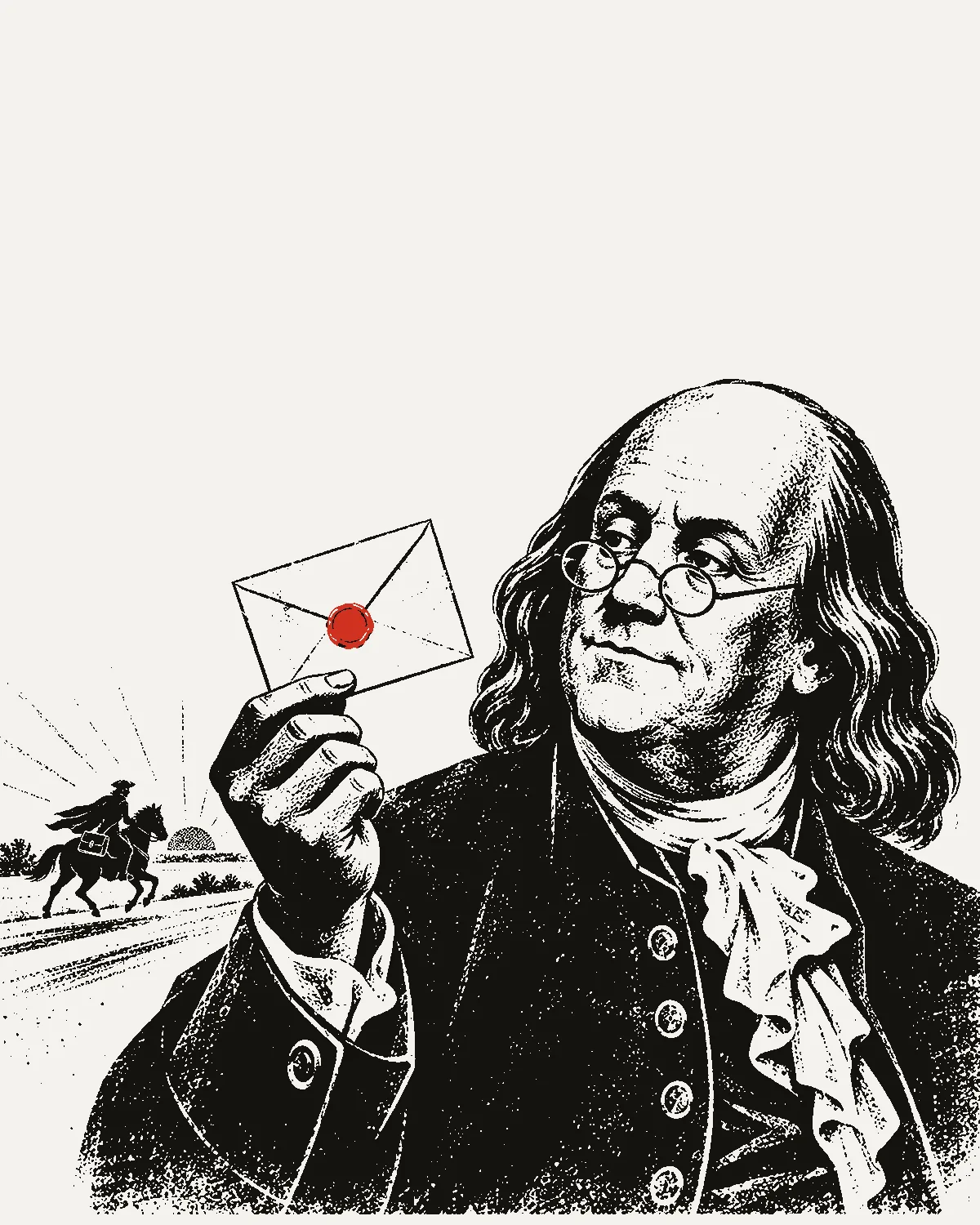
1775 · 2026
America's oldest technology. America's newest.
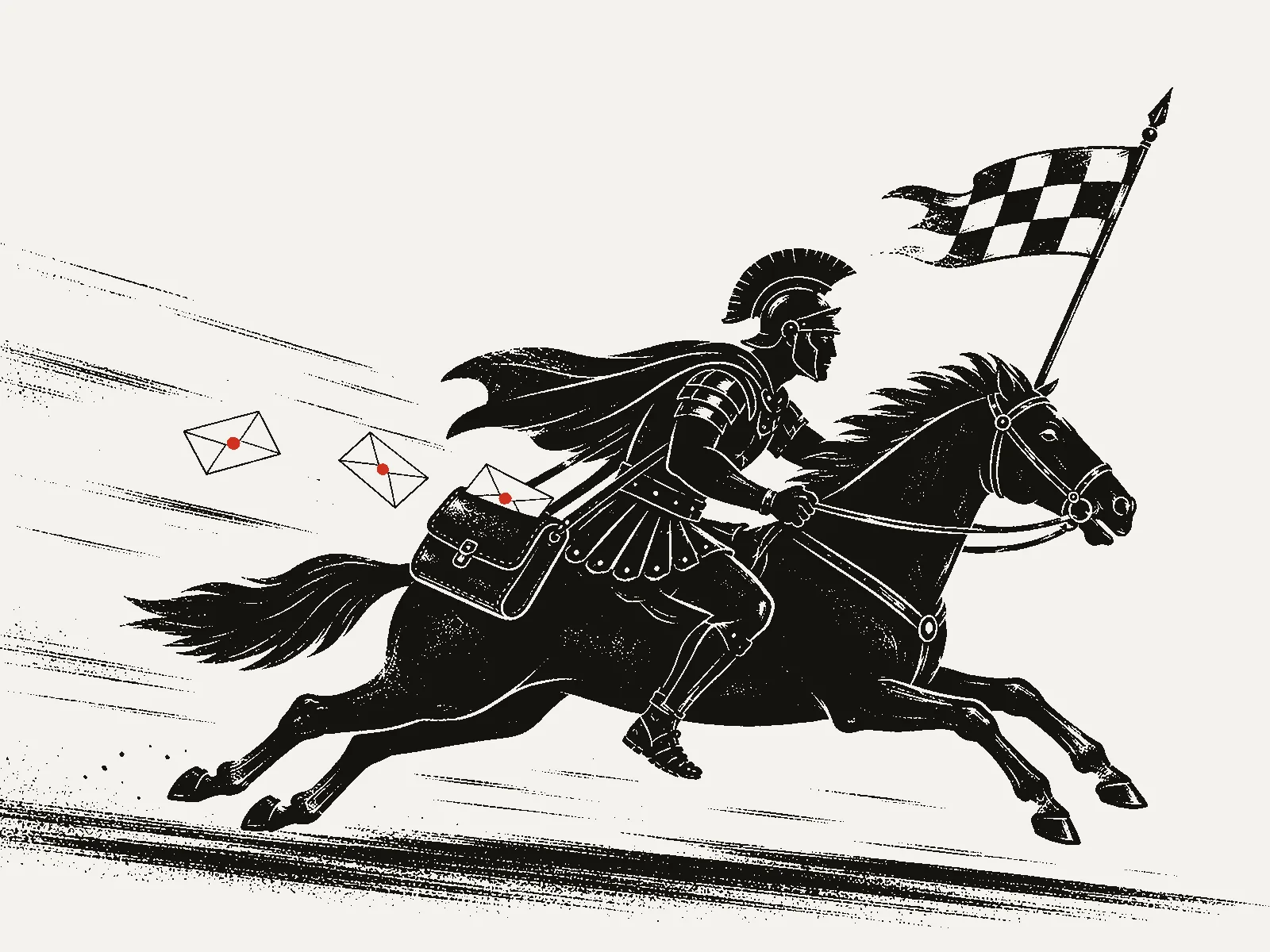
In July 1775 the Continental Congress made Benjamin Franklin the first Postmaster General, a year before there was a United States to deliver to. The post is older than the country.
Franklin built it so a farmer in Massachusetts could hear from a printer in Philadelphia, and it still reaches every door in America six days a week. It is the one piece of infrastructure every citizen shares. Mail 2.0 puts the newest thing this country has built, machines that read, reason, and hold a pen, in service of the oldest. The letter still arrives the way Franklin's did. What changed is that every one of them was written for the person who opens it.
Second · The line
From public record to a sealed envelope, five stations.

The record
The voter file and the contribution record for the district, pulled and matched. Every consistent voter. Every donor.
The read
An agent per person does what a diligent staffer would do with an afternoon and a library card, for everyone, overnight.The letter
One letter, in your voice, about the one thing that reader is likely to care about. Every claim checked against your positions.The hand
A robotic arm with a fountain pen writes the page and addresses the envelope. Real ink, real pressure, real paper.The mail
Folded, sealed, stamped, sorted, and dropped. Disclaimer on every page. Returns tracked back to the file.What the read is allowed to use
Public. All of it.
- Registration, party, and vote historyVoter file
- Precinct results, fifteen years backCertified returns
- Every gift, to whom, and whenFEC · State disclosures
- Property, deeds, business filingsCounty · Secretary of State
- What they said on the recordCouncil minutes · Letters to the editor
- What happened on their streetLocal news · Permits · FEMA declarations
- What they chose to publishPublic posts and profiles
The rule: nothing a neighbor could not find with a library card and a long afternoon.
What it never touches
Never.
- Purchased consumer profiles or data brokers
- Credit, income, or financial records
- Health, medical, or insurance records
- Private messages, private accounts, anything behind a login
- Anything about a minor
- Location data, phone data, app data
One line back from any reader removes them from every future mailing.
Third · Two tracks
Two kinds of letter. Two kinds of reader.
Every donor gets their ask.
Abyss finds and ranks every donor in the district. Each one gets a letter that knows what they have given, what they care about, and what to ask for.
- Every prospect in the district, ranked by capacity and fit
- The ask calibrated to their history
- Stamped return envelope in every letter
- Replies matched back to the file

Every consistent voter. Every door.
Start with everyone who reliably votes in your primary. Go all the way to every eligible voter in the district. Each one gets a letter about their street.
- The whole primary electorate, or the whole district
- The one issue that reader is likely to care about
- Election date, polling place, and disclaimer on every page
- Second letter to the same reader at forty percent off
Track 01 · Fundraising
Every donor gets their ask.
The fundraising letter is the oldest tool in politics, and it has always been the same letter to everyone. Ours is not.
Abyss, our fundraising engine, ranks every donor in the district from the contribution record and the public signals around it. Then a letter goes to each of them that knows what they have backed before, what they run, what they said on the record, and what happened in their year. The ask is a number chosen for that person, not a menu of boxes.
- Ranked by capacity and fit
- One ask, chosen per reader
- Return envelope, stamped
- Second touch when the check clears
3 gifts, 2 cycles, all local · owner, Main St. pharmacy since 2009 · spoke at council in March · written, on the arm
retired district engineer · chairs the water board · letter to the editor on the reservoir bond · written, on the arm
max donors to two statewide races · sold the dealership in 2025 · reading
41 checks logged · $16,850 · every reply matched to the file · thank-you letters queued for the arm tonight.
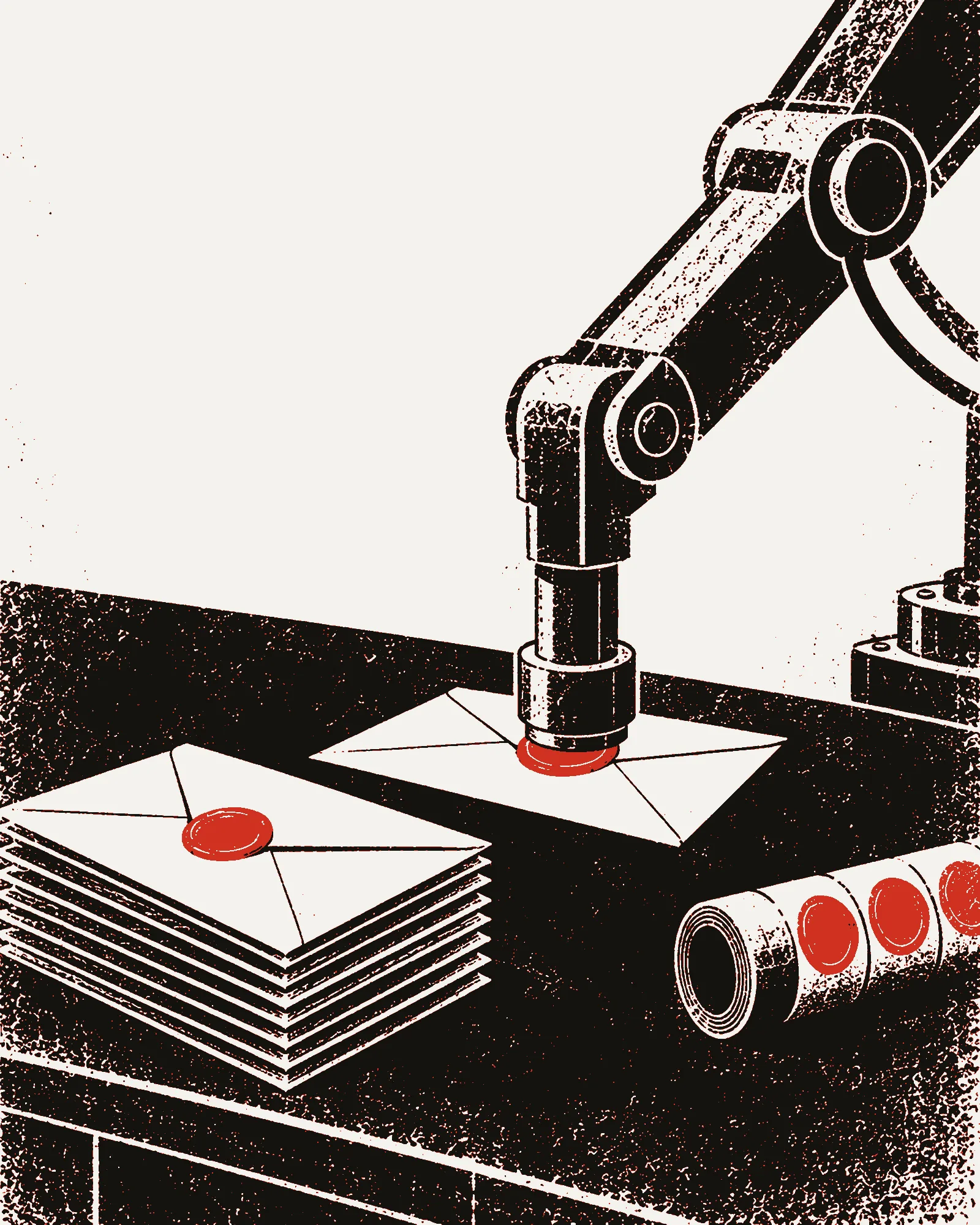
The press
Every fundraising letter leaves with a stamped return envelope folded inside it. The reply comes back to us, gets matched to the file, and the thank-you letter is on the arm that night.
Track 02 · Voting
Consistent primary voters 11,640 · every eligible voter 46,210 · you choose the line.
lowest in the district · plant closed 2019 · two flood declarations · 618 letters, the culvert and the incentive vote
rezoning map from the January board meeting · Cedar Lane inside the line · 412 letters, the school boundary bill
7,420 written · 4,220 to go · first drop landed Monday · 3 opt-outs, removed.
Every consistent voter. Every door.
A primary is decided by the people who always vote. We write to all of them. Then, if you want the whole district, we write to everyone else too.
Each letter is about the reader's own street: what their precinct did last time, what closed, what flooded, what the school board is about to move. It tells them the date, where they vote, and the one thing you would do about the thing they already care about. The disclaimer is on every page. Nothing leaves without your approval of the voice and the claims.
- The primary electorate, or the whole district
- One issue per reader, from the record
- Date, polling place, disclaimer
- A second letter before election day
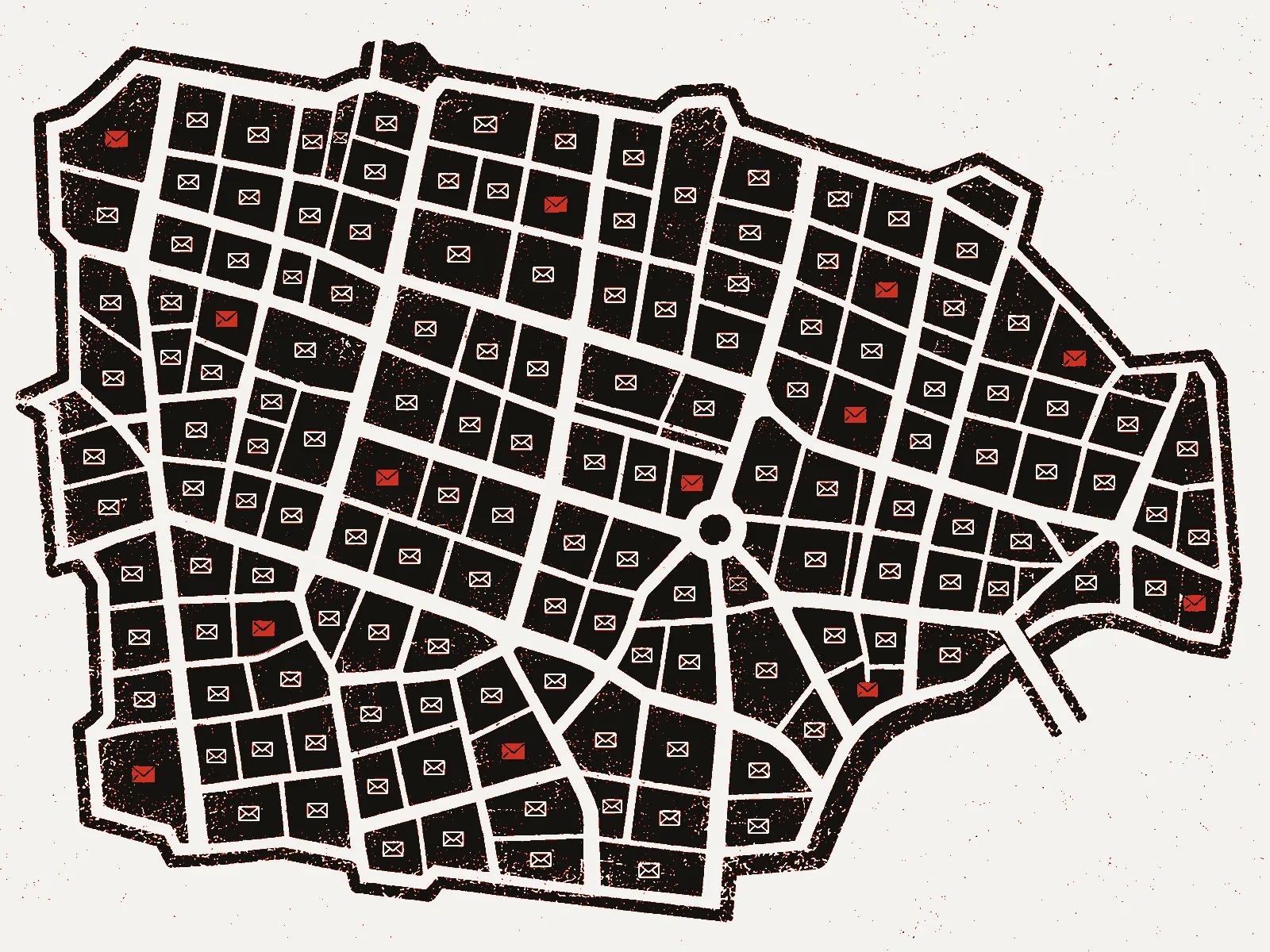
Every block
The district is a map of mailboxes. Every block gets its own letter, every precinct its own issue, and the ones in red are the doors that decide the primary.
Fourth · The letter
Same candidate. Four neighbors. Four letters.
A sample district, a sample candidate, four sample readers. Pick one and watch what the letter knows. Every fact in the right-hand column is the kind that is public.
Paid for by Marsh for State House · Sample district, sample candidate, sample readers

Fifth · The hand

The pen
One arm, one pen, one letter at a time. The nib is real, the ink is real, and the pressure changes with every stroke.
A pen, not a printer.
The letter is written by a robotic arm holding a fountain pen. Pressure, speed, and slant change stroke to stroke, the way a hand does. No two pages are alike because no two letters are.
- Fountain pen, real ink, linen paper
- Envelope addressed by the same hand
- Folded, sealed, and stamped by machine
- Never touches a printer
It is a machine, and we say so when asked. What matters to the reader is that the letter was written for them, and it was.
Sixth · The price
Priced per letter. Shown to the cent.
A postcard costs sixty cents and does nothing. A volunteer letter costs a volunteer. This costs less than a cup of coffee per reader, and every reader gets their own.
Every donor in the district, ranked by Abyss
- Prospect ranking from FEC and state records
- The read: one agent per donor, public record only
- One letter, one ask, in your voice
- Pen-written page and envelope, first-class stamp
- Stamped return envelope enclosed
- Replies matched to the file, thank-you letter queued
- Second touch, same reader$3.90
Minimum 500 letters · $3,250
Order the fundraising track
Falls to $2.20 at district scale
- Voter file pulled and matched, consistent voters or all
- The read: one agent per voter, public record only
- One letter, one issue, in your voice
- Pen-written page and envelope, first-class stamp
- Date, polling place, disclaimer on every page
- Opt-outs honored, returns tracked
- Up to 10,000 letters$2.90
- 10,000 to 50,000$2.50
- Above 50,000$2.20
- Second letter, same voter40% off
Minimum 1,000 letters · $2,900
Order the voting trackStart from a typical race
Letters
Presets are typical sizes, not your district. Consistent voters are people who voted in most recent primaries. Every eligible voter is the full registered file, roughly four times as many.
Your district, every reader, one letter each
Where $2.50 goes · one voting letter, mid tier
Before you ask
The questions everyone asks.
01Is this legal?
Yes. Voter files are public records in every state and are provided to campaigns for exactly this purpose. Contribution records are published by the FEC and by every state. Everything else the read uses is a public document, a public meeting, a public filing, or something the reader chose to publish. Every letter carries the disclaimer your jurisdiction requires, and we file the paperwork for the mailing.
02Do readers know a machine wrote it?
The letter is from you. You approve the voice, the positions, and a sample of every batch before the pen moves. If a reader asks how it was written, we tell them: a machine held the pen, and the letter was written for them from the public record. Nobody has minded the pen. They mind being one of a hundred thousand, and they are not.
03What will you never put in a letter?
Anything not on the public record. Anything about a minor. Anything about health, money, or a private relationship, even if it was in the paper. Anything the reader would reasonably feel watched by. The test we use is simple: would a neighbor who knew this fact say it to their face? If not, it does not go in.
04Can a reader opt out?
One line back, by mail or by text to the number on the page, and they are removed from every future mailing for that campaign. We report opt-outs to you weekly. They are rare, and we would rather have them than a letter that lands wrong.
05How fast?
The read finishes in nights. The pen is the constraint, so the lead time depends on how many arms we point at your district and how many letters there are. A city council race is days. A state house district is weeks. We quote a drop date with every order and hold it.
06What do you need from me?
Your positions, written or spoken, and an hour on the phone so the voice is yours. Your committee's name for the disclaimer. Your approval of the sample batch. After that, the machine runs and you get the returns.


Mail 2.0
Mail the district.
Send us the district and the office. We come back with the count, the price, the drop date, and a sample letter written to one real voter in it, on paper, in the mail to you.